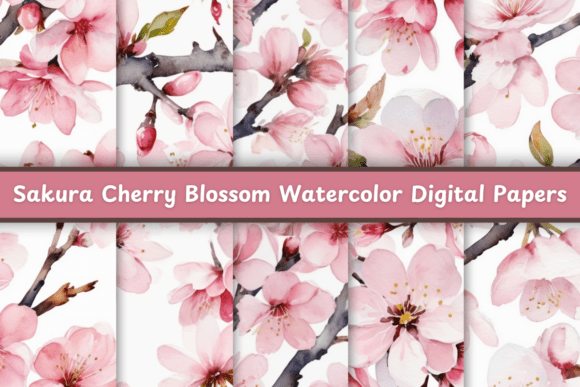
Sakura Cherry Blossom Watercolor: A Designer's Guide to Soft, Elegant Patterns
There's a particular quality to the sakura cherry blossom watercolor aesthetic that instantly communicates delicacy, renewal, and a timeless, organic beauty. It's more than just a floral pattern; it's a visual language that speaks of spring, gentle sophistication, and a handcrafted touch. For designers and creators, this style offers a powerful tool for evoking emotion and setting a specific tone. These digital papers, featuring seamless watercolor cherry blossom patterns, provide a versatile foundation for a multitude of projects, blending artistic flair with practical functionality.
The Visual Language of Sakura Watercolor
What makes this particular style so compelling? The sakura cherry blossom watercolor effect captures the essence of the flower through soft, translucent washes of color. You'll typically find a palette of blush pinks, soft whites, and subtle magentas, often accented with hints of sage green for the stems and buds. The watercolor technique itself introduces beautiful, unpredictable textures—slightly uneven edges, gentle bleeds, and variations in opacity that mimic the look of paint on paper. This organic quality is key. It prevents the pattern from feeling sterile or overly digital, giving it a warm, authentic personality. The seamless nature of these papers means the motifs tile perfectly, allowing for large-scale applications without visible joins, which is a critical feature for professional-grade design assets.
Where This Pattern Truly Blooms: Practical Applications
The real value of a sakura cherry blossom watercolor pattern lies in its remarkable adaptability. It’s a creative font for the visual world, applicable across countless mediums. Let's break down where it excels.
Branding and Marketing Materials
For brands in the wellness, beauty, floral, stationery, or luxury food sectors, this pattern is a natural fit. It can be used as a background texture on a website, a subtle overlay on business cards, or the main visual for product packaging. When used in logo design, it can serve as a beautiful, textured backdrop that makes a clean, modern typeface pop. The key is balance. The pattern's personality is strong, so pairing it with a simple sans serif font for body text ensures readability and maintains a professional hierarchy. For social media graphics, it creates an instantly recognizable and cohesive brand identity, perfect for Instagram stories, Pinterest pins, and Facebook cover photos.
Publishing and Editorial Design
In publishing, the sakura cherry blossom watercolor pattern shines. Imagine it as the endpaper in a hardcover journal or the background for a chapter title page in a book about mindfulness, travel to Japan, or contemporary poetry. For magazines, it can create stunning full-page layouts for features on spring fashion, garden design, or wellness retreats. When used as a PowerPoint background, it transforms a standard presentation into an engaging visual experience, provided the text remains highly legible. Always test the pattern at the actual presentation size to ensure the texture doesn't interfere with your message.
Crafts, DIY, and Physical Products
This is where the pattern transitions from digital asset to tangible creation. The 300 DPI resolution and 3600x3600 pixel size are essential here, ensuring crisp, clear prints even at large scales. Use the digital papers to create:
- Custom Stationery: Design and print your own letterheads, envelopes, and planner stickers.
- Scrapbooking & Decoupage: The seamless patterns are ideal for covering boxes, furniture, or creating layered scrapbook pages.
- Gift Wrapping & Packaging: Print onto large format paper or fabric to create unique wrapping paper or drawstring bags.
- Handmade Goods: Apply to the covers of handmade journals, notebooks, or as a fabric texture for pillows and tea towels.
Making It Work: Strategic Implementation
Simply having a beautiful asset isn't enough; strategic use is what elevates a project. Here’s how to work with the sakura cherry blossom watercolor pattern effectively.
Pairing with Typography
The soft, flowing nature of watercolor pairs beautifully with both serif fonts and sans serif fonts. For a classic, elegant feel, combine it with a traditional serif typeface like Garamond or Caslon. For a more contemporary, clean look, a geometric sans serif like Futura or Montserrat provides a striking contrast. A script font or handwritten font can be used sparingly for accents, like a "Thank You" or a name, but be cautious—too much script on a busy background can become illegible. The principle of contrast is your guide: pair the organic pattern with structured type.
Evaluating Project Fit
Ask yourself: does this pattern support or distract from my core message? It’s perfect for projects that aim to feel handcrafted, gentle, romantic, or natural. It may not be the right choice for a tech startup, a construction company, or a brand that needs to project aggressive, high-energy dynamism. The pattern is a character in your design story; make sure it’s the right one for the narrative.
Leveraging the Digital Papers
The included JPG files are your primary design assets. Because they are seamless, you can scale them, crop them, and use them as fills in any design software. For a more integrated look, use them as a clipping mask behind text or shapes. In web design, they can be tiled as a subtle website background. Remember that the large file size (3600x3600) gives you immense flexibility to crop sections without losing quality, effectively giving you dozens of unique, smaller patterns from one file.
A Final Note on Authenticity
The enduring appeal of the sakura cherry blossom watercolor style is its connection to something real and beautiful. When you use these digital papers, you're not just applying a decoration; you're tapping into a visual tradition that resonates deeply with many people. Whether you're building a brand identity, designing a wedding invitation, or crafting a personal gift, this pattern offers a way to infuse your work with a sense of artistry and care. The key is to use it thoughtfully, ensuring it enhances your project's purpose and speaks directly to your intended audience.